My Core Ownership
Conversational AI interaction design
Adaptive workout system design
Holistic progress framework
In-workout innovation concepts
Competitive research and positioning
Cross-team terminology framework
Wireframing and prototyping
Usability Testing (A/B)
Duration
6 months
Team
Lidi Fu (UX Designer)
Steve Meadows (Principal Interaction Designer
Dominik Donocik (Lead Experience Designer)
Louis Block (Senior Motion Designer)
Heidi Tran (Senior UI Designer)
Callum Buchanan (Senior UI Designer)
OVERVIEW
Quick Context
xFIT, known for connected fitness hardware needed to pivot.
The goal: drive non-connected app subscriptions by fall 2026, while retaining existing hardware users.
I worked on UX strategy and systems design for Origin — a ground-up redesign of the xFIT mobile experience, repositioning it as an AI-driven holistic fitness platform that could compete without requiring xFIT equipment.
Over six months across two releases, I designed the goal-setting architecture, dynamic planning system, holistic progress framework, and in-workout innovation concepts — while establishing the terminology and journey frameworks that aligned engineering, content, and product teams.
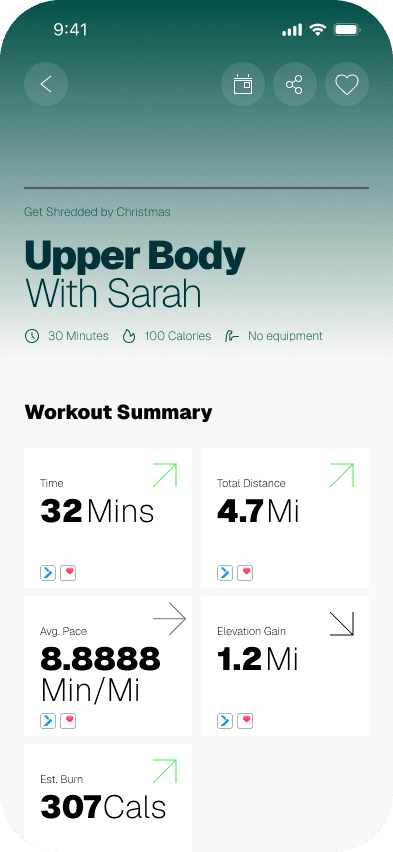
MARKET INSIGHT
Where existing platforms
fall short
"Apple training was very rigid, and I stopped, I can't do it with my back" - Kath, 36
Research signals
The connected fitness market was crowded — Zing, Peloton, Ladder, Tonal, Fitbod, Apple Fitness. But the opportunity wasn't about matching features.
Strength training is the fastest-growing fitness category, yet unlike cardio, users can't just press go.
They need guidance, planning, and a way to track progress across their whole health — not just one dimension.
What competitors consistently missed
Personalization stopped at onboarding
Most apps asked questions upfront but delivered generic plans.
Plans were rigid
When users missed workouts — which they inevitably did — plans broke. No platform handled real-life disruptions gracefully.
Goals were oversimplified
Fitness reduced to "build muscle" or "lose weight." Real users had complex goals encompassing mental well-being, recovery, and lifestyle integration.
Motivation faded quickly
Pre-recorded workouts felt impersonal. No platform made returning after breaks easy with personalized re-entry plans.
DESIGN DECISIONS & CORE WORK
Building a shared language first
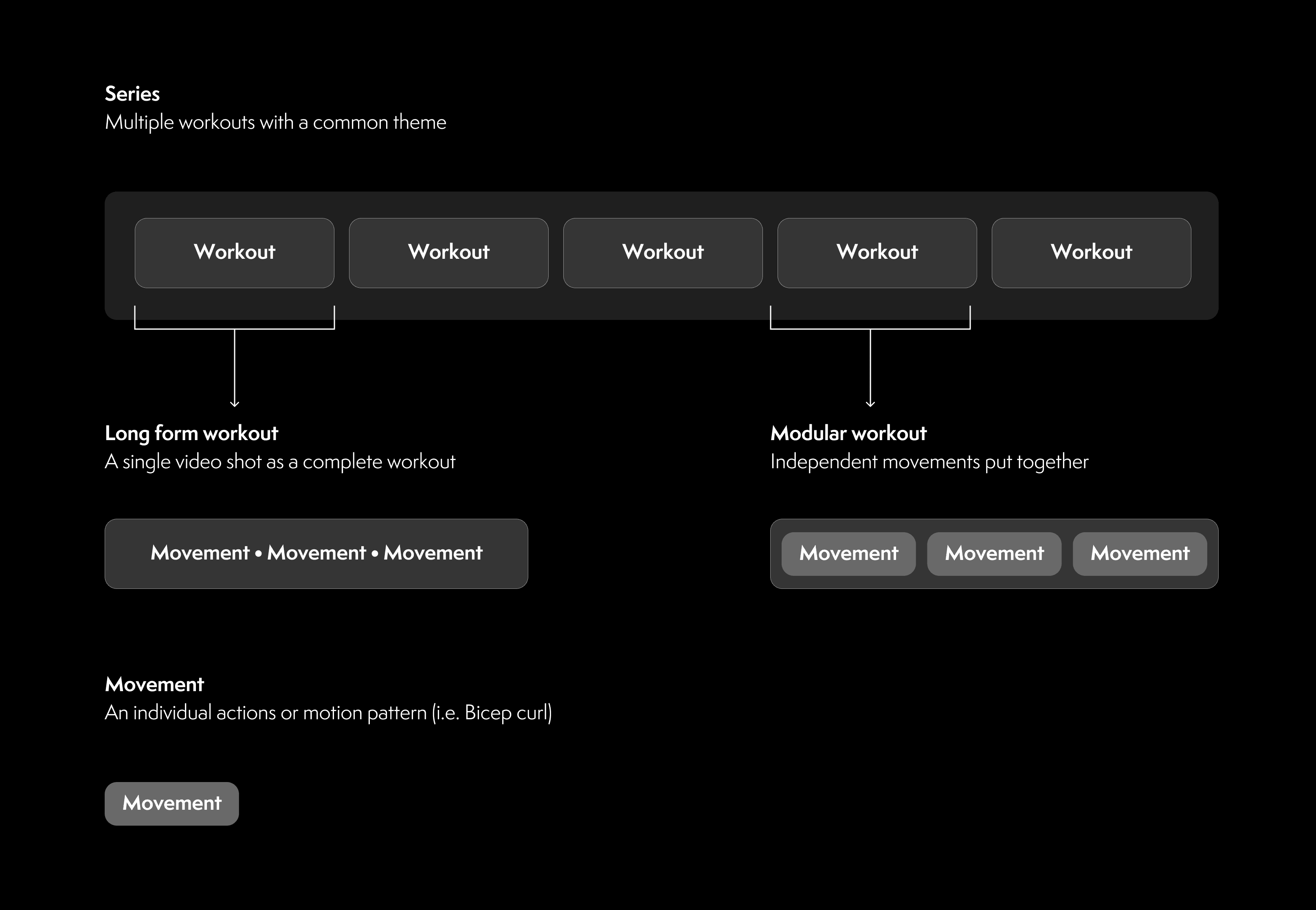
The project involved dozens of stakeholders across xFIT and Native Design. Terms like "workout," "session," "plan," and "series" meant different things to different people — creating friction in every review.
I developed a terminology framework that defined the full content hierarchy:
This became the reference document across engineering, content, and product — and prevented misalignment before it could slow down development.
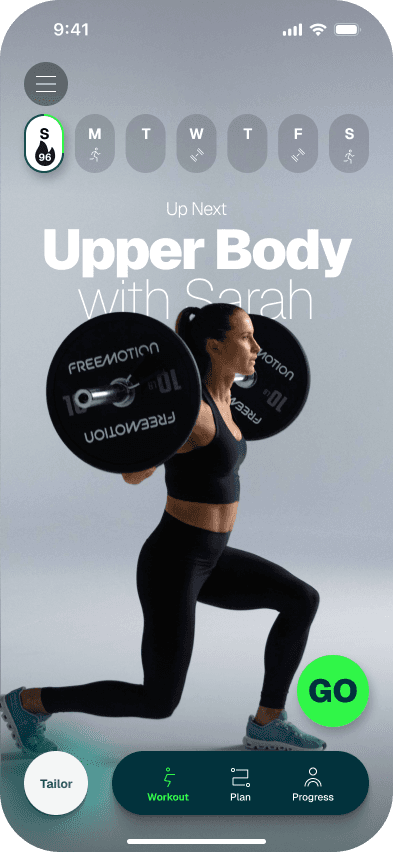
Tailor: a conversational AI that runs the experience
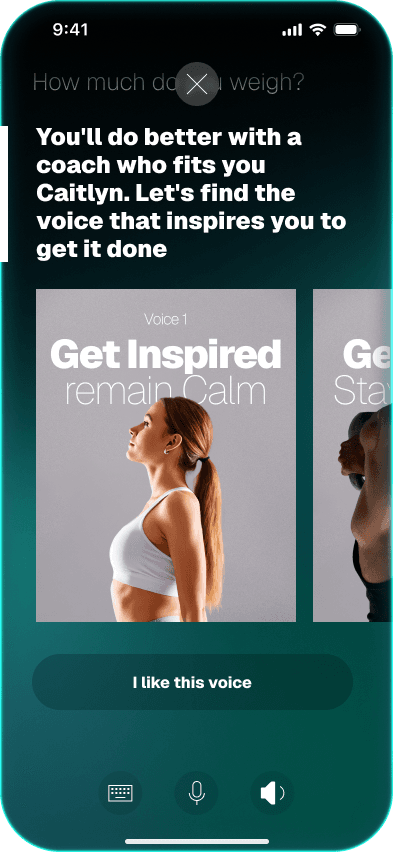
Most fitness apps treat AI as a feature — a chatbot you visit, a recommendation engine in the background. We designed Tailor as the primary interaction layer of the entire app.
Tailor isn't a chatbot. It's the coach that ties the entire experience together.
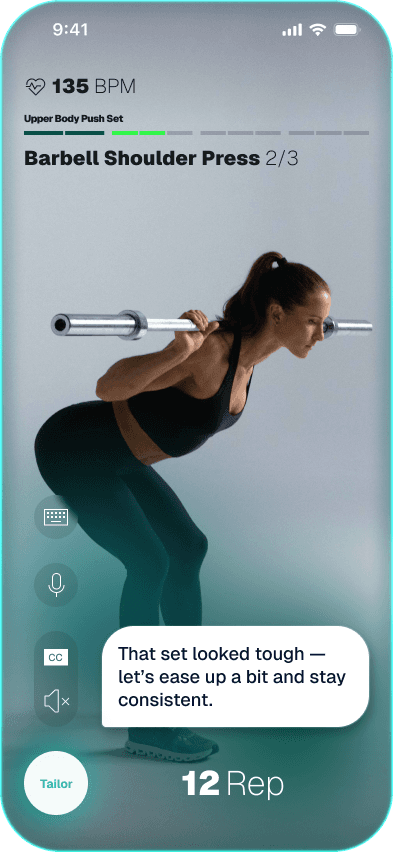
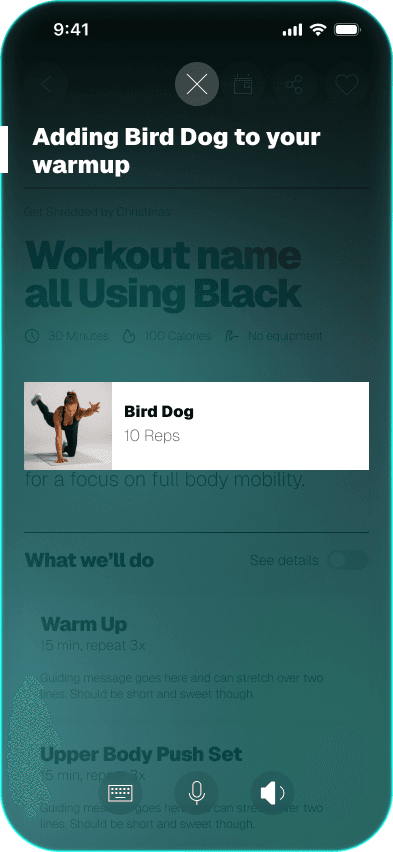
Tailor isn't a screen you go to. It's the voice that runs through everything — goal-setting, plan building, pre-workout adjustments, mid-session coaching, rescheduling, and the nudges that bring you back. You can speak or type. It listens, responds, and adapts.
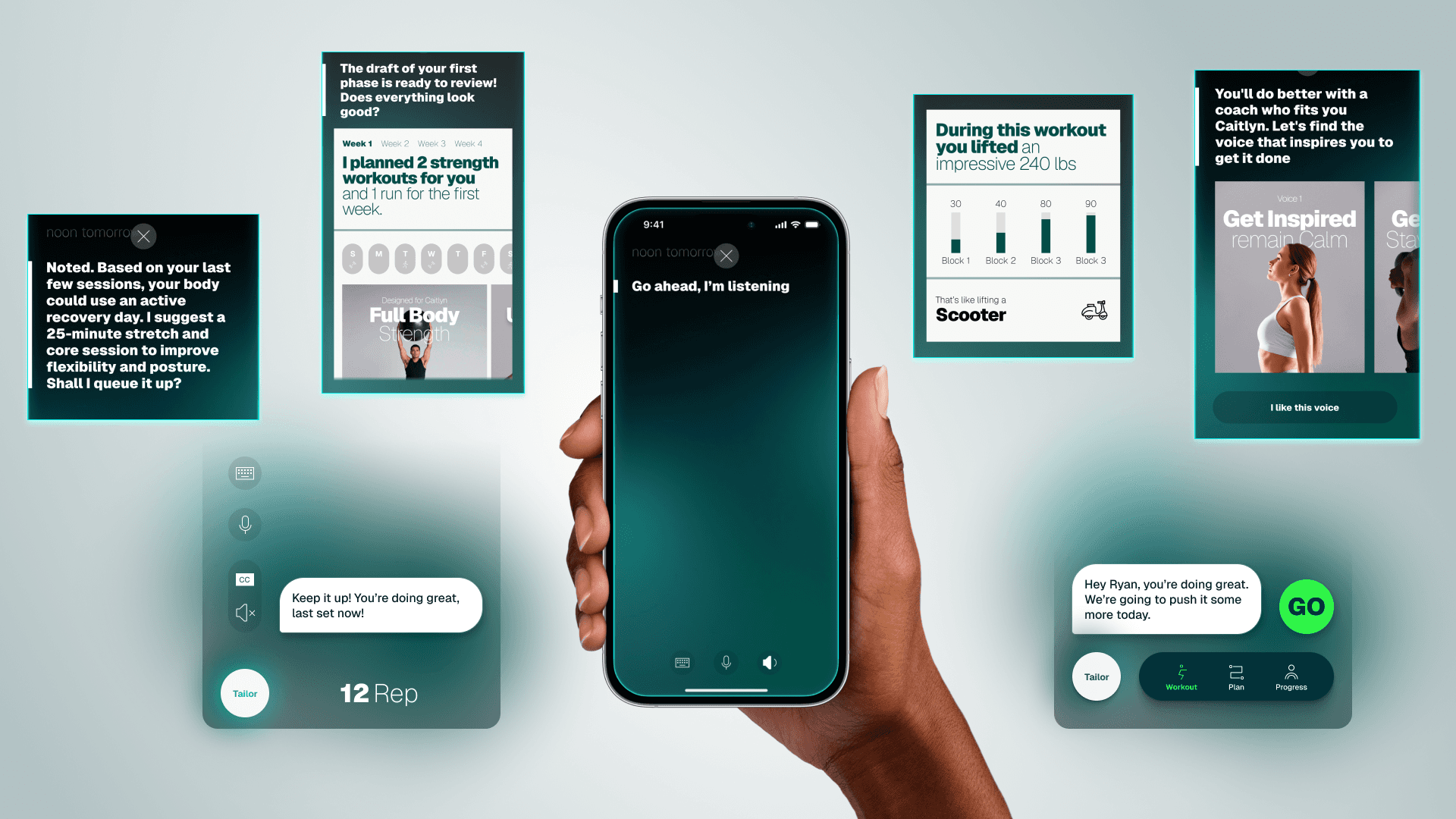
How Tailor shows up across the full experience
Plans that bend, not break
SmartAdjust™
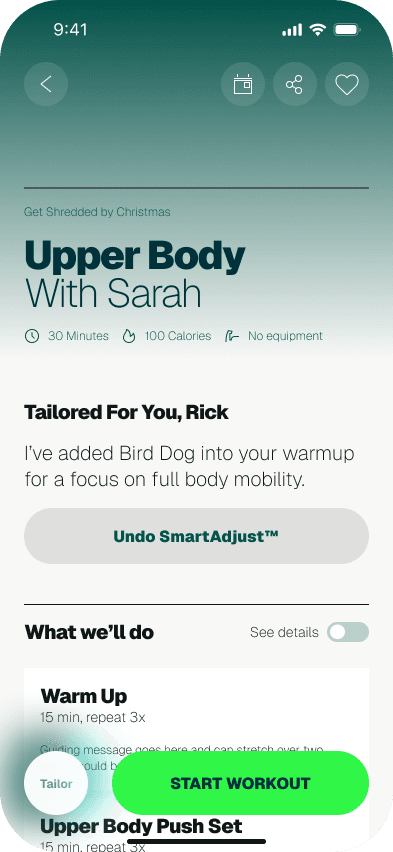
SmartAdjust™ already existed for xFIT's cardio equipment — adjusting incline and speed in real time. Strength is a different problem. Multiple lifts per session, each with its own weight and rep count, and getting intensity wrong has safety implications.
I redesigned SmartAdjust™ for strength across three layers:
Pre-workout recommendations
RPE feedback loop in workout
Weekly plan integration
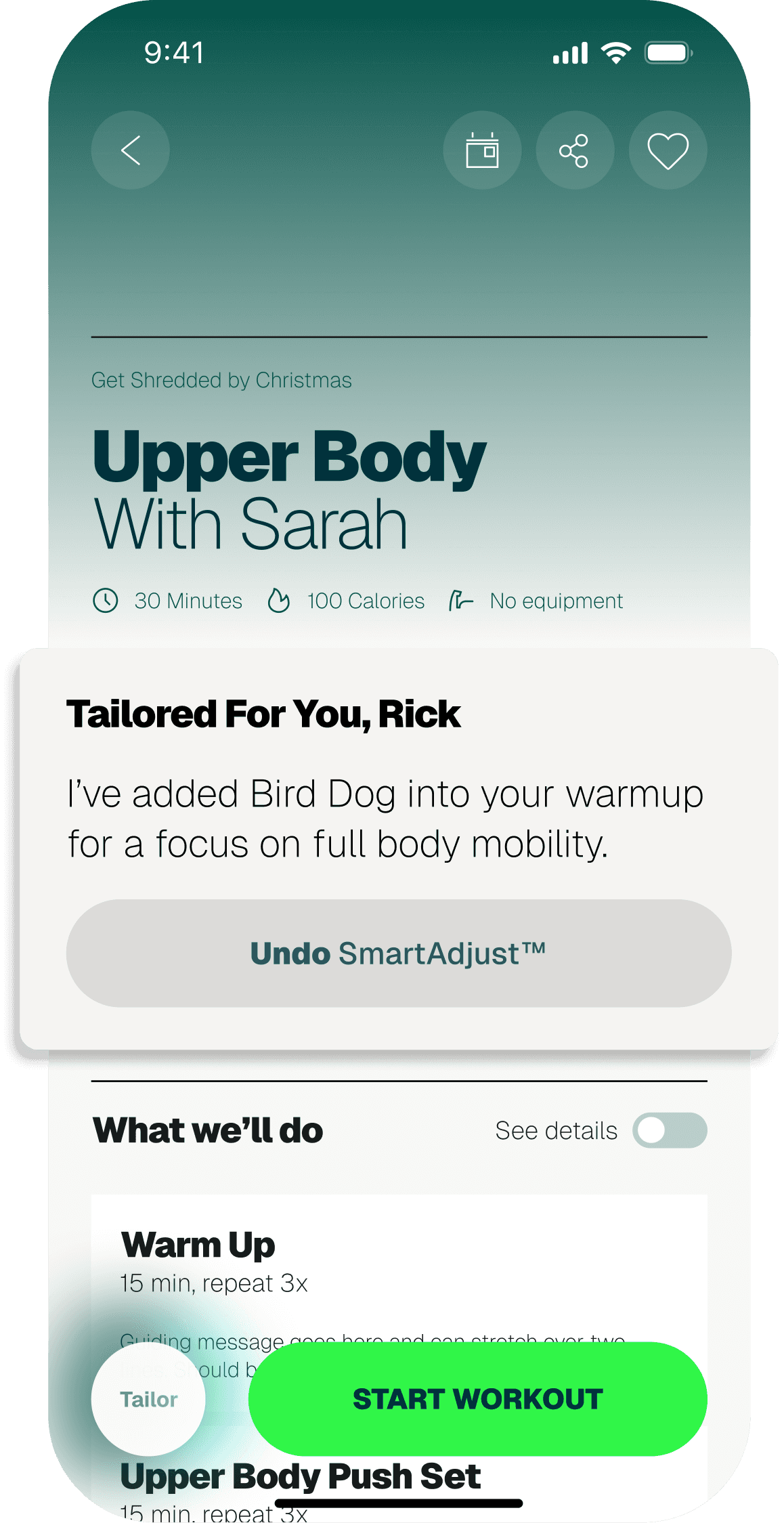
Pre-workout tailoring
SmartAdjust reviews your history and adjusts the session before you start. Users can undo any change.
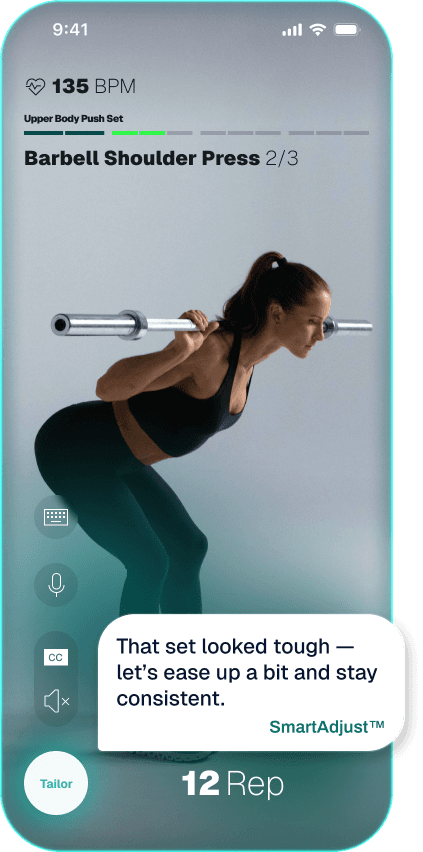
Real-time adaptation
Mid-workout, the system reads effort and adjusts intensity to keep you consistent and safe.
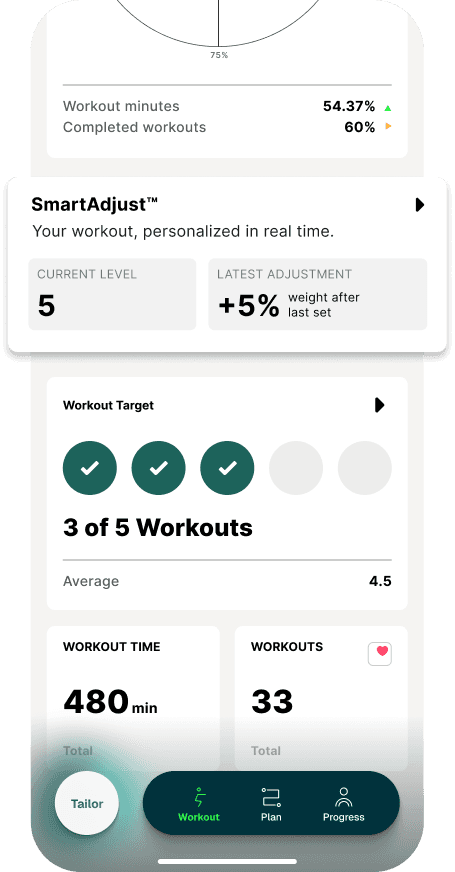
Progress and tracking
A persistent SmartAdjust level that progresses over time, with latest adjustments and workout targets.
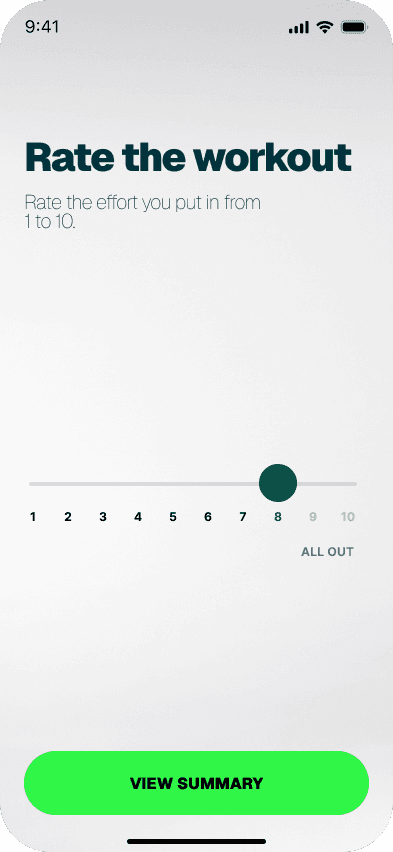
RPE rating
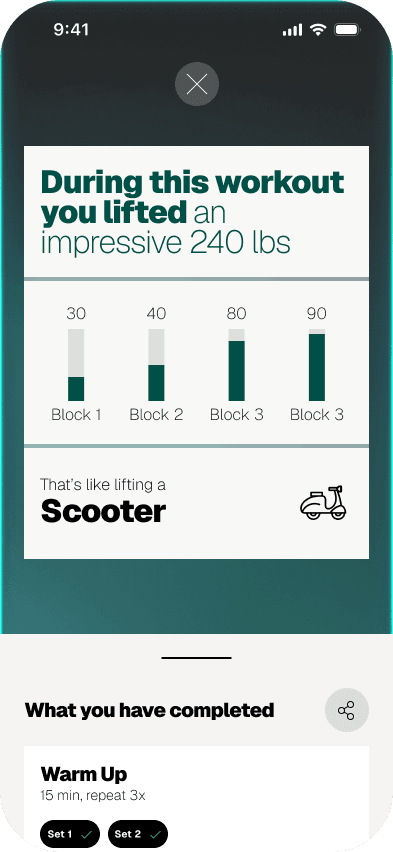
Post-workout exertion rating on a 1–10 scale, feeding directly into future recommendations.
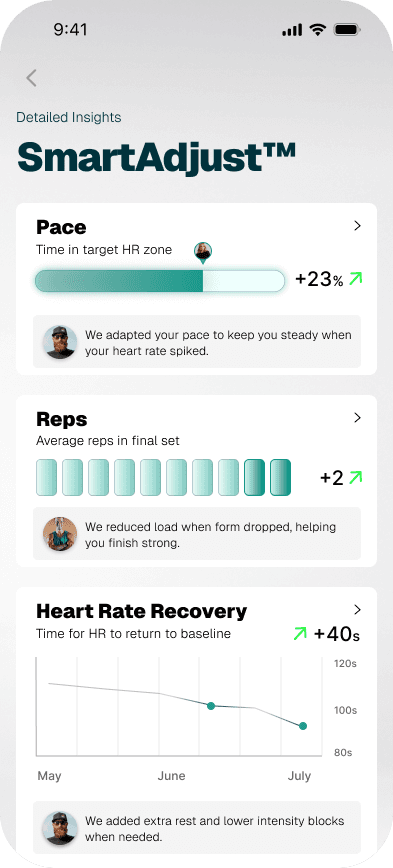
Post-workout insights
Detailed breakdown of what SmartAdjust did and why — pace, reps, recovery, form-based adjustments.
Making progress feel holistic, not fragmented
No fitness app tracked the full picture. Users cobbled together data from multiple platforms. Existing scoring was either too simplistic (Apple's activity rings) or too narrow (Tonal's strength-only score).
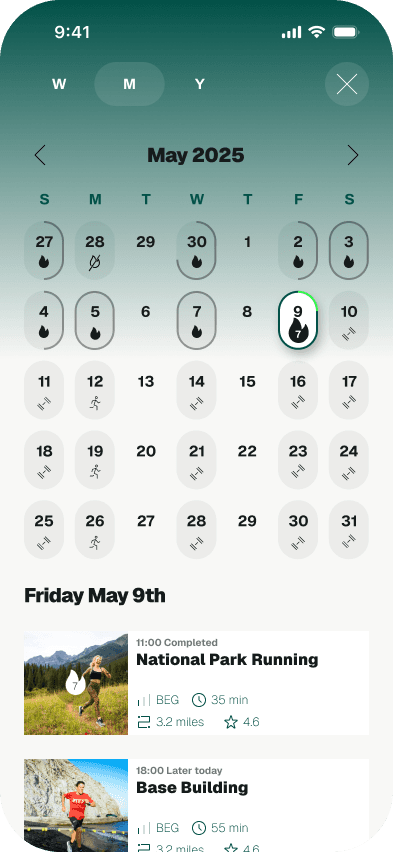
We designed a holistic progress system with up to 4 tracks — Strength, Cardio, Recovery, and Fuel — each with weekly targets that roll up into a unified view.
Daily targets aggregate toward 100%. Weekly targets reflect plan requirements across all modalities.
Third-party data from Apple Health and wearables feeds into Recovery and Cardio tracks — so non-xFIT activity counts toward targets. AI insights connect the dots across tracks: "On days you have less sleep you miss strength targets — try workouts earlier."
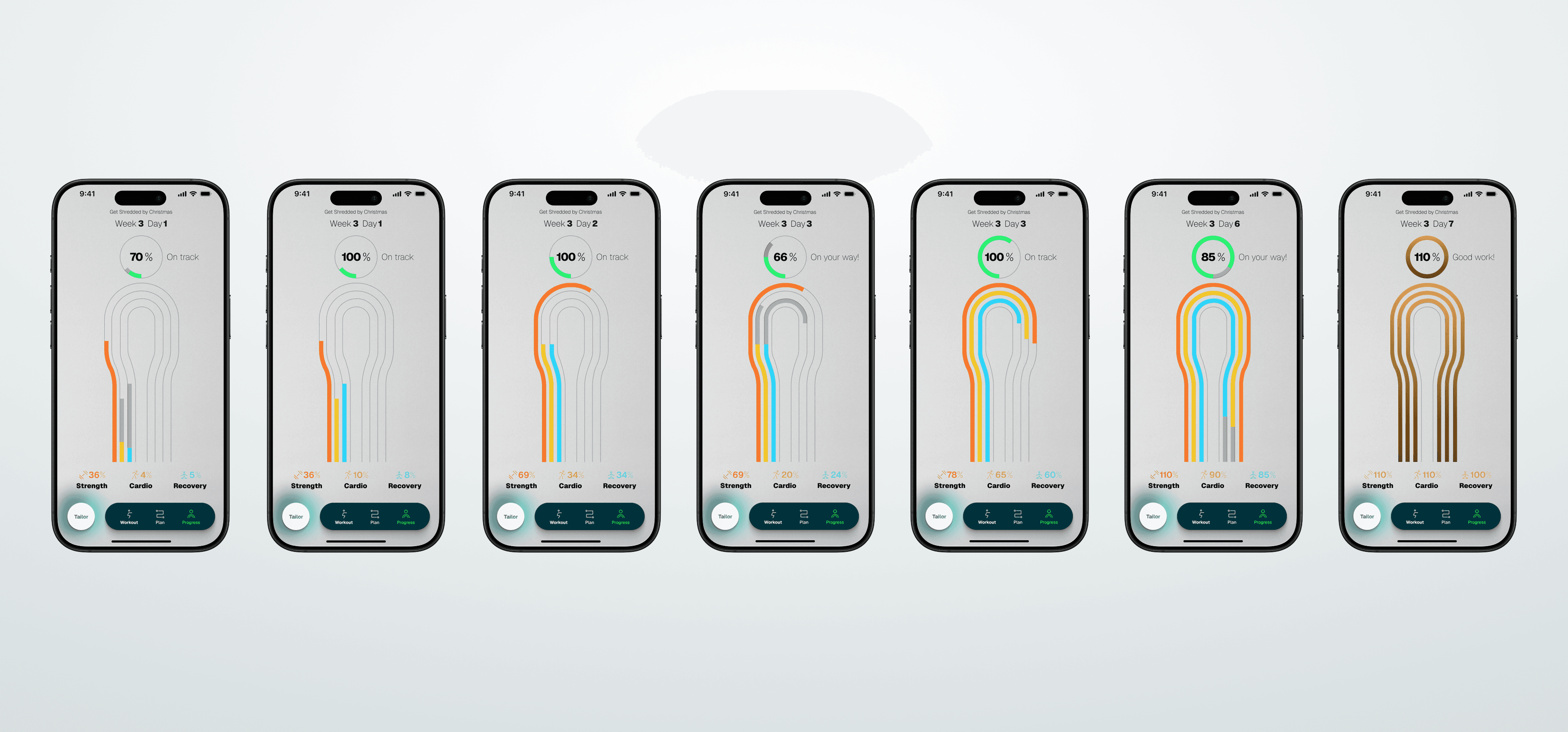
Progression phases throughout the week
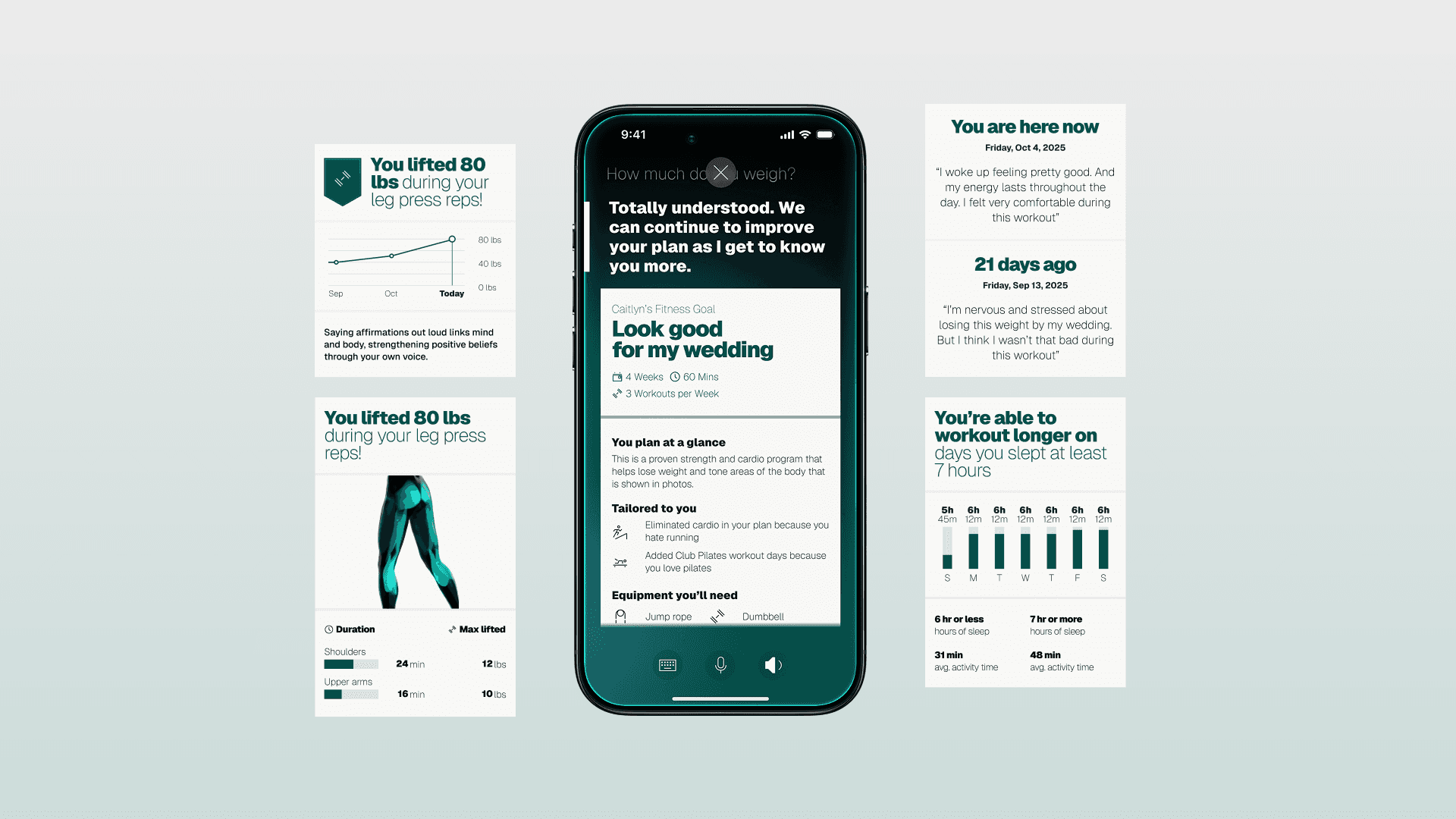
Connecting goals, sleep, strength, and recovery in one view
Innovation concepts: making workouts worth returning to
Beyond the core system, I developed 7 in-workout experience concepts — each grounded in behavioral science research and validated in the August 2025 user study.
The design principle:
"Create workout experiences that feel new, distinctive, worth sharing — moments people love, talk about, return to."
To communicate these concepts internally, I produced them as a narrated podcast series. The format made complex interaction ideas accessible to non-design audiences across xFIT's leadership and engineering teams.
Intelligent Overlays
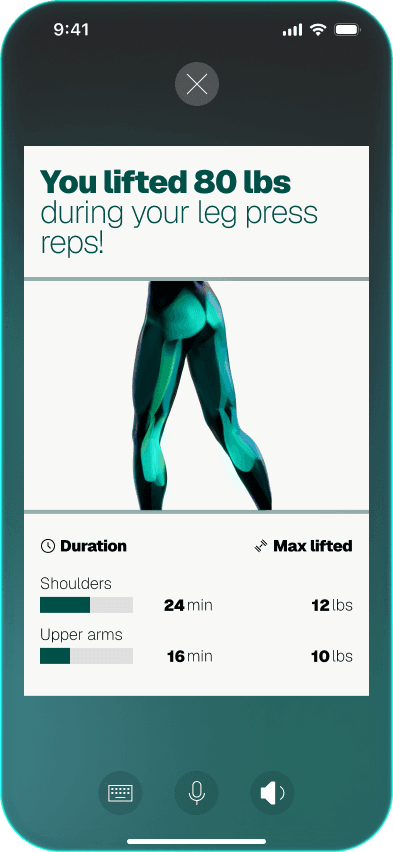
Highlights muscle groups being worked, camera zooms on form. 13 of 15 benchmarked apps relied on verbal instruction only — visual overlays were a clear differentiator.
The Finisher
An AMRAP challenge at the end of each workout, matched to your goal. Progression tracking makes self-assessment fun, not clinical.
Holistic Progress
A 4-track weekly system that turns fragmented fitness data into a single visual — strength, cardio, recovery, and fuel filling toward 100%.
IMPACT
Reflection
Trust is the real AI design problem
The hardest question wasn't how Tailor should work — it was whether users would trust an AI coach over a human one. No clean answer. The system had to work for skeptics and believers equally.
Phasing is design work
We couldn't ship everything in September. Deciding what belongs in R1 vs. R2 required the same rigor as designing the features themselves.
Holistic is easy to want, hard to measure
100% of research respondents endorsed tracking everything in one place. But nutrition is unsolved, rest days feel like zero progress, and showing decline can backfire. The challenge wasn't the visualization — it was deciding what counts.
If I had more time
Validate Tailor's error recovery with real users
Resolve nutrition tracking beyond partnerships
Prototype SmartAdjust rescheduling flows with real users earlier
Push innovation concepts like Intelligent Overlays from concept to specification